Home shine Women for Bees
Women for Bees Women for Bees

Women for bees

Assisting women in preserving living nature
Created in 2020, the Women for Bees programme aims to train and empower women beekeepers around the world, enabling them to develop sustainable professional activities based on their expertise.

It also contributes to the protection of bees and the repopulation of colonies in ecologically valuable areas. The programme places particular emphasis on local and endemic bee species.

Local partnerships around the world

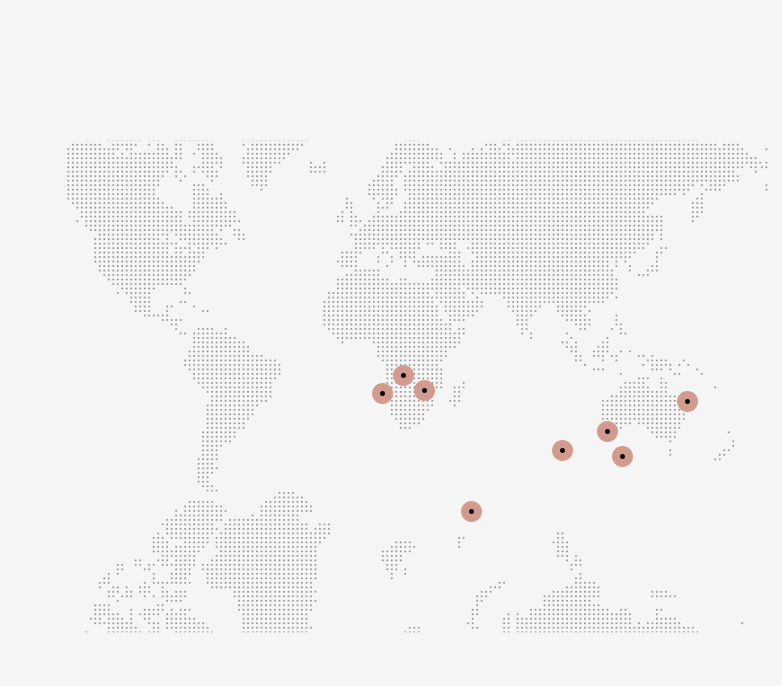
Initially launched in partnership with UNESCO, the Women for Bees programme began in southern France before expanding to biosphere reserves in Cambodia, and then Rwanda, where 33 women beekeepers were trained in 2024. In total, nearly 200 women have been trained, and more than 3,500 hives have been installed.


Alongside its partnership with UNESCO, Guerlain is also developing a series of Women for Bees initiatives with leading local NGOs, in particular:


  • Guerlain x Conapi in Bologna, Italy
  • Guerlain x El Rincón de la Abeja in Barcelona, Spain
  • Guerlain x Umeda Mitsubachi NPO and Ginza Mitsubachi NPO in Japan
[object Object]
Women for bees Logo

Women

for bees

Spain

With NGO El Rincón de la Abeja, in Barcelona in 2022 and 2023

France

In southern France in 2021

China

Dans la réserve de biosphère de Xishuangbanna, province du Yunnan

Japan

Avec les associations à but non lucratif Umeda Mitsubachi à Osaka et Ginza Mitsubachi à Tokyo

Italie

Avec la coopérative Conapi, en Émilie-Romagneet en Calabre en 2022 et 2023

Rwanda

Dans la réserve de biosphère de Gishwati-Mukura Landscape en 2023

Cambodia

Avec la Fondation Maddox Jolie-Pitt (MJP) à Angkor/Tonle SAP Biosphere Reserve 2022

Women for bees Logo

Women

for bees

Women for Bees Map
Spain

With NGO El Rincón de la Abeja, in Barcelona in 2022 and 2023

France

In southern France in 2021

China

Dans la réserve de biosphère de Xishuangbanna, province du Yunnan

Japan

Avec les associations à but non lucratif Umeda Mitsubachi à Osaka et Ginza Mitsubachi à Tokyo

Italie

Avec la coopérative Conapi, en Émilie-Romagneet en Calabre en 2022 et 2023

Rwanda

Dans la réserve de biosphère de Gishwati-Mukura Landscape en 2023

Cambodia

Avec la Fondation Maddox Jolie-Pitt (MJP) à Angkor/Tonle SAP Biosphere Reserve 2022

The example of Japan

In 2024, Guerlain strengthened its commitment in Japan by meeting with the 50 women beekeepers who graduated in 2022 and 2023 in Tokyo and Osaka, alongside Mirei Kiritani, Guerlain ambassador in Japan.


Thanks to the support of local partners Ginza Mitsubachi Project in Tokyo and Umeda Mitsubachi Project in Osaka, the Women for Bees programme in Japan offers a concrete and innovative approach to empowering women in beekeeping, a field traditionally closed to them and dominated by men in the country.

[object Object]
[object Object]

WOMEN FOR BEES RWANDA

Three years since launching the pioneering “Women for Bees” programme, UNESCO and Guerlain, have ambitiously expanded their apicultural entrepreneurship programme to the Gishwati-Mukura Landscape Biosphere Reserve in Rwanda —the programme’s first endeavor on the African continent— with a new cohort of beekeeping trainees.

The training serves as a path toward their financial autonomy and emancipation, while fostering camaraderie, bringing the women together in collaborative work and a supportive exchange of ideas.

[object Object]

“Beekeeping inspires me to think big, and through it, I know I can achieve significant challenges.”
EMILIENNE MUKASINE, BEEKEEPING TRAINEE

WOMEN FOR BEES CHINA

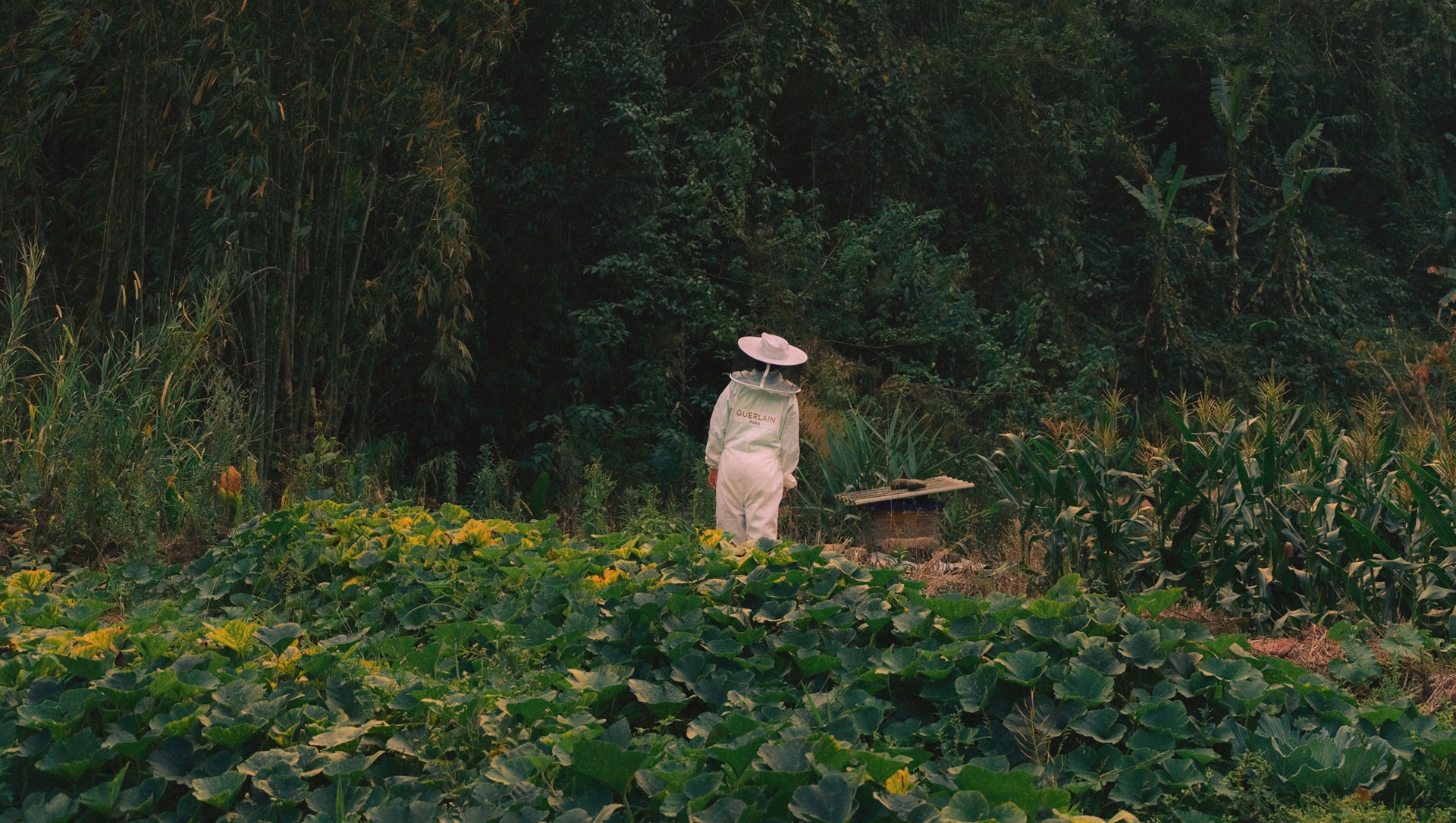
In 2025, the initiative has taken root in the Xishuangbanna Biosphere Reserve in China’s Yunnan province, training a new cohort of women beekeepers.

Forty-five women and ten men are taking part in an intensive nine-month training program that combines modern hive management techniques, acquisition of beekeeping knowledge and development of entrepreneurial skills.

The initiative addresses a critical need since local bees – in particular the Apis cerana – are vital pollinators for both agriculture and wild plants. To address the decline in bee populations, Women for Bees strives to pass on practices that respect the environment while raising awareness among local communities of the importance of preserving ecosystems.

[object Object]
Extending product lifespan through refills

Extending product lifespan through refills

Read More
Carbon footprint and SBTi trajectory

Carbon footprint and SBTi trajectory

A scientifically measured, framed, and controlled climate trajectory

Read More