EXCEPTIONAL RENDEZVOUS
MUGUET
BY LES ATELIERS VERMONT
BY LES ATELIERS VERMONT
It is to Guerlain’s Master Perfumer that we owe the remarkable feat of recreating the scent of the lily of the valley. Known as a “mute” flower, its natural essence cannot be extracted. Since 2016, Guerlain’s Muguet has been composed by Thierry Wasser, capturing with exquisite precision the fragrance of these lucky blossoms. In a burst of freshness, green, herbaceous notes meet the floral refinement of jasmine and rose, lending this emblematic trail its tender, pearly nuances of green and pink. At the heart of this bouquet emerges the olfactory illusion of a freshly picked sprig of lily of the valley.
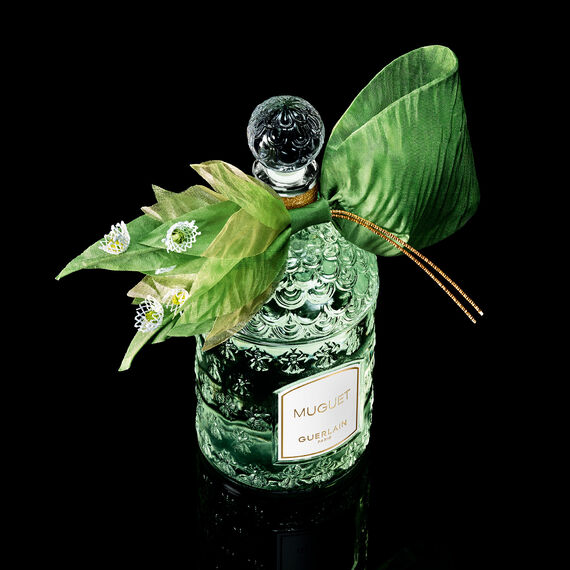
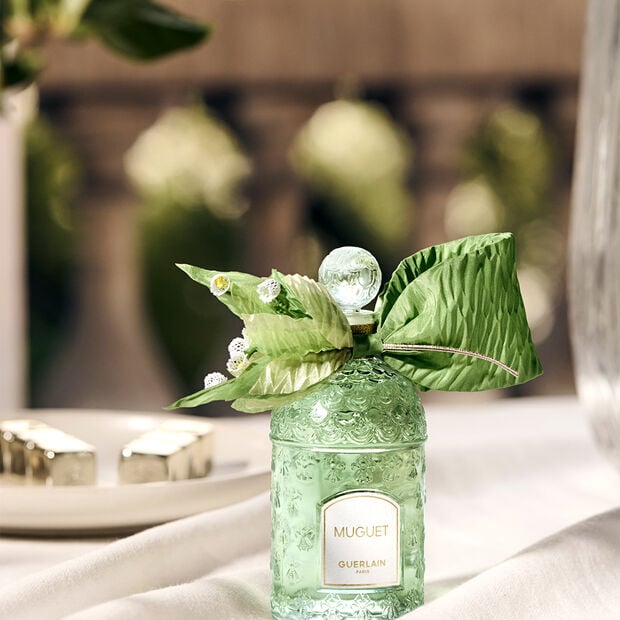
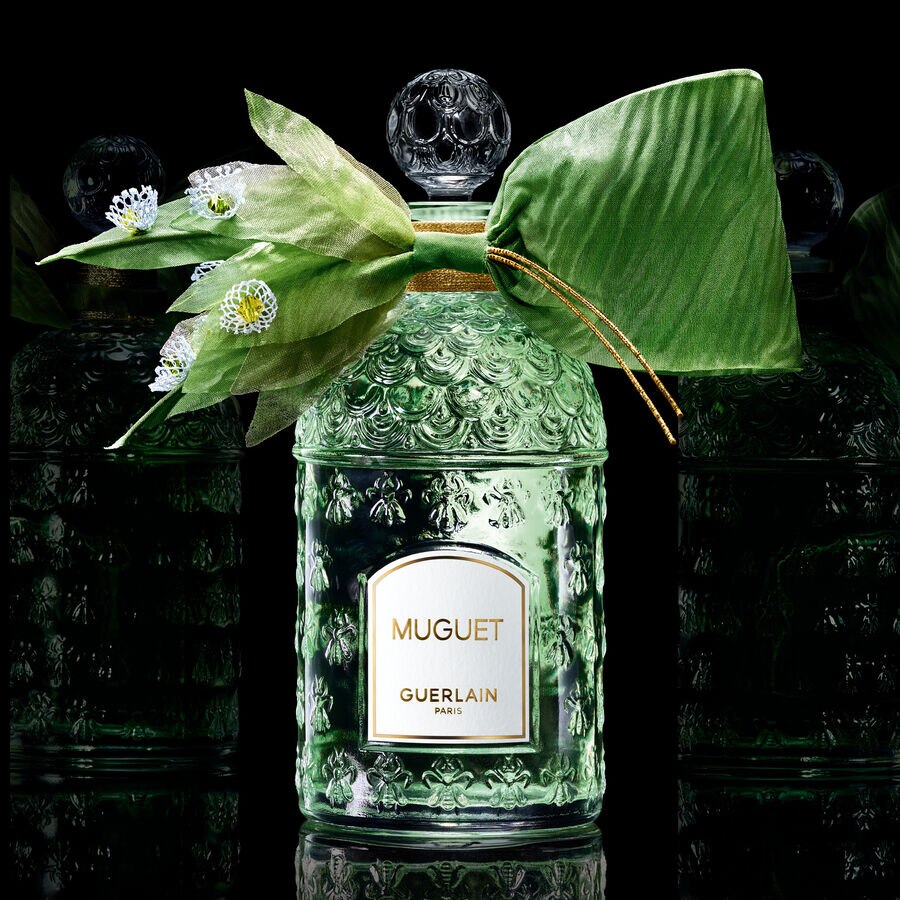
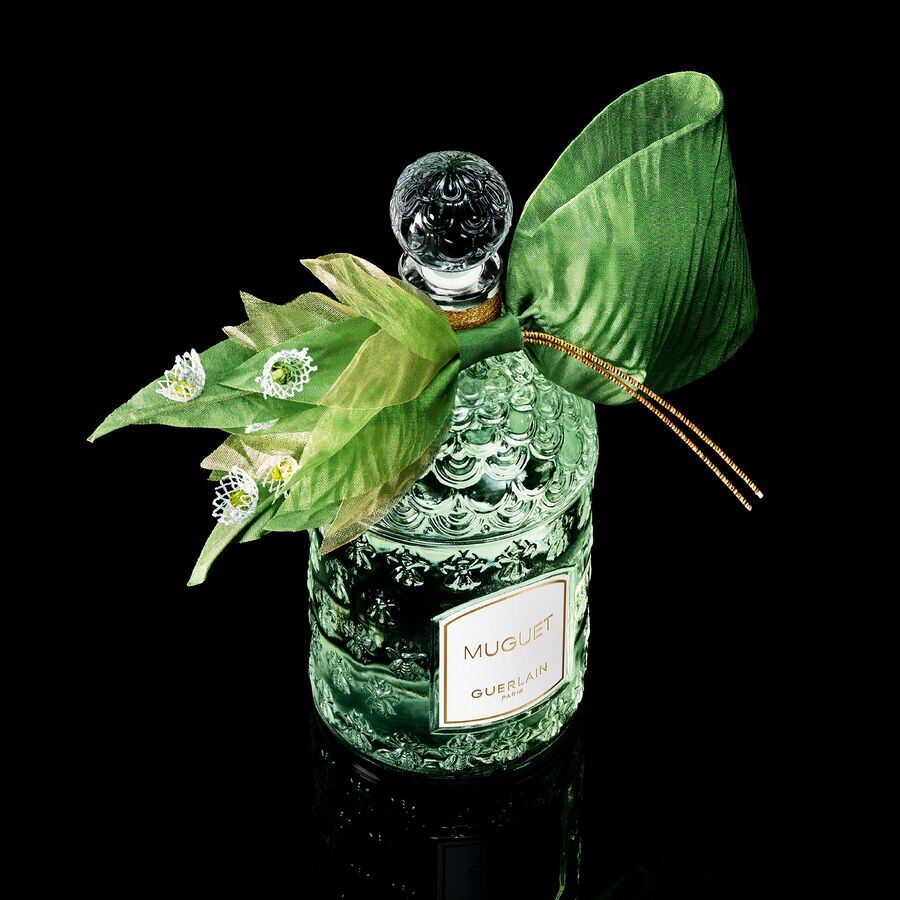
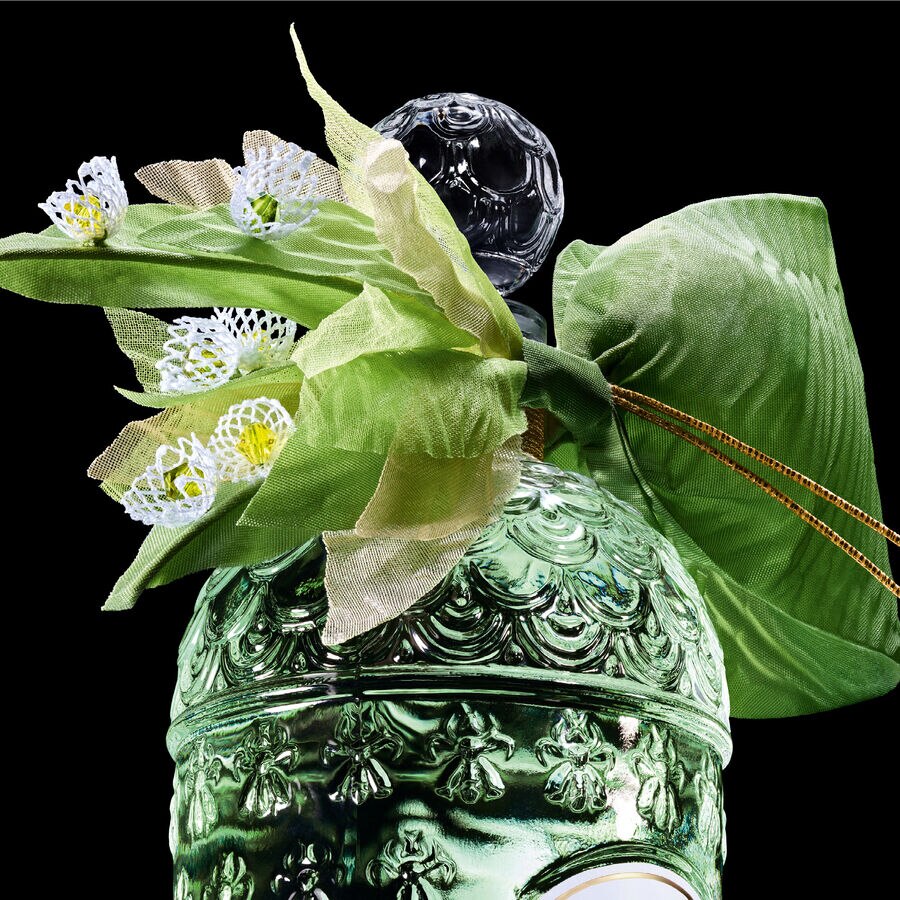
The Bee Bottle is adorned with a bow crafted from soft green silk taffeta, shaped using the Japanese Shibori technique, an ancestral art of folding and heat-setting fabric. Under the fingers of the Ateliers Vermont embroiderers, the material is pleated, tied, and set, creating shifting reflections. The fabric forms a supple geometry around the bottle’s neck, as though the silk itself wished to curl into a vegetal scroll. From this textile sculpture emerge lace lily-of-the-valley bells, delicately hand-embroidered, each revealing a crystal sparkle at its heart.
To offer this exceptional fragrance the most poetic adornment, Guerlain has called upon true virtuosos of artistic embroidery. Since 1956, Ateliers Vermont has been creating exquisite embroideries in the heart of Paris for the most prestigious Haute Couture houses, preserving age-old craftsmanship. True architects of the unseen, the expert hands of these embroiderers orchestrate wonder itself: pearls, sequins, crystals, and threads come to life beneath their touch, transforming fabric into a work of art.
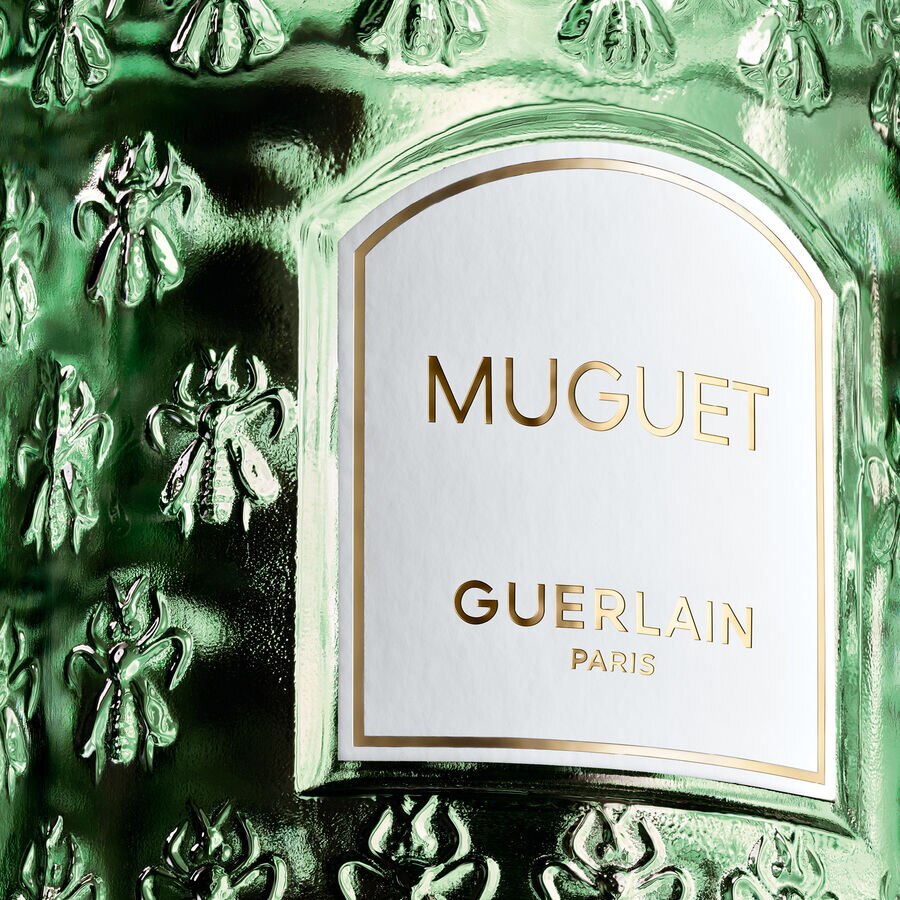
Once again, the Bee Bottle, an icon of Guerlain’s heritage, created in 1853 to celebrate the marriage of Empress Eugénie and Napoleon III, is reimagined in a new and exclusive edition. Designed by Pochet du Courval, this objet d’art bears witness to a craft tradition that has spanned centuries while remaining resolutely modern. The glassblowers, heirs to a skill passed down from generation to generation since 1623, possess a unique expertise, elevating glass to the nobility of crystal.